
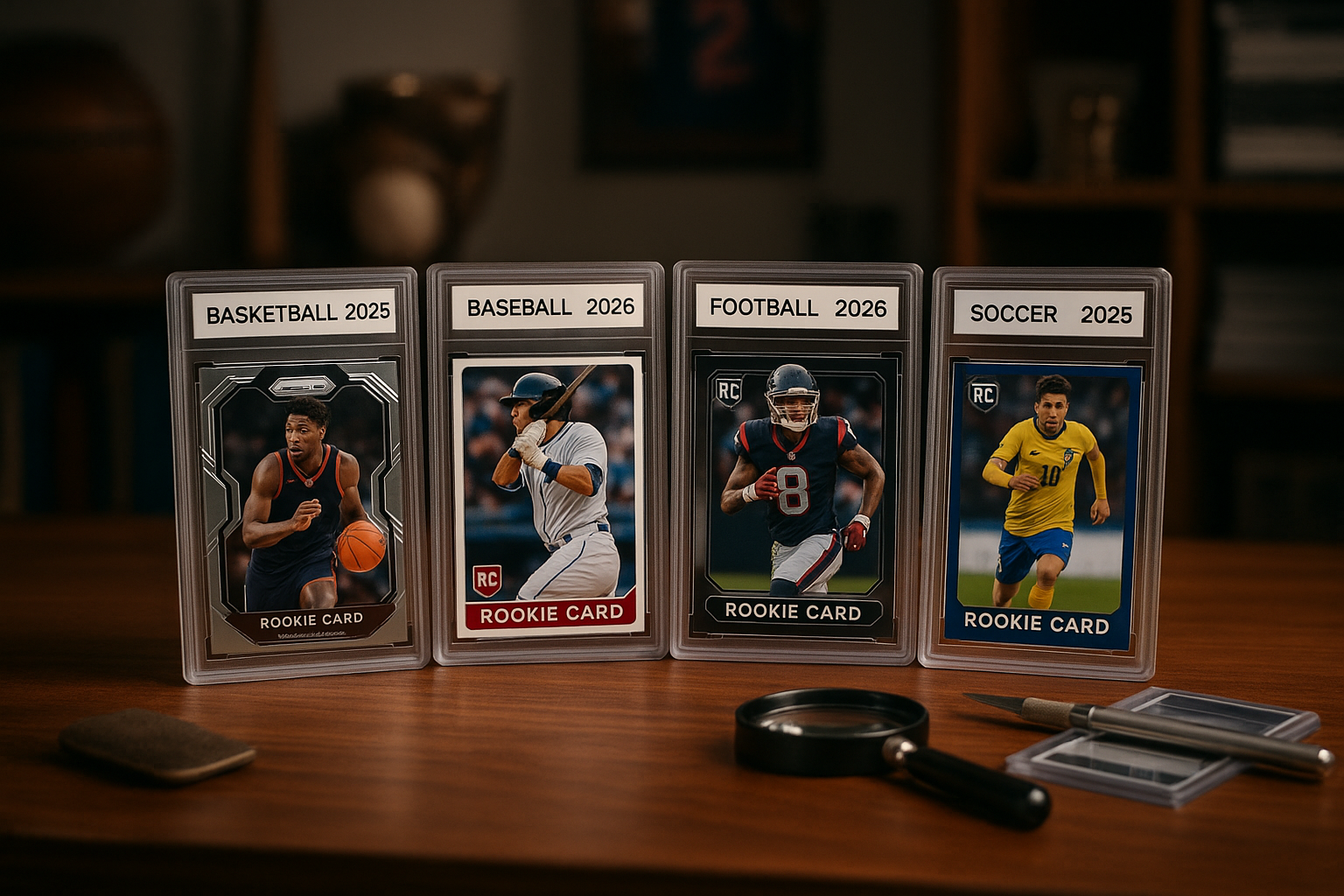
Rookie cards are the heartbeat of the sports card market, and each year, a select group of athletes catches the eye of dedicated collectors. In 2026, the buzz around specific rookies is louder than ever. This article dives into the rookie cards capturing attention, what makes them special, and how their value may shape the future of collecting.
Why Rookie Cards Hold Such Allure
The unique appeal of rookie cards has deep roots in the culture and evolution of sports card collecting. Traditionally signifying a player’s official entry into the professional ranks, a rookie card does more than commemorate a first season—it captures a moment of hope, hype, and possibility. For collectors, owning a rookie card is akin to owning the first edition of a classic novel: it’s a piece of history, the beginning of a superstar’s journey, and a tangible link to the promise of greatness. Over decades, rookie cards have emerged as foundational investments, often forming the centerpiece of any serious collection. Psychologically, collectors are drawn to the narrative of witnessing and “owning” the earliest phase of a career. There’s an immense thrill—and a sense of foresight—in identifying future legends before they become household names. Financially, rookie cards have consistently delivered some of the highest returns in the hobby. When a player’s career explodes, demand for their rookie issue can soar, elevating values astronomically. The value proposition is further fueled by limited print runs and premium parallel versions, making certain rookie cards rare commodities. Some of the hobby’s most iconic and valuable examples include the 1952 Topps Mickey Mantle, the 1986 Fleer Michael Jordan, and the 2000 Playoff Contenders Tom Brady. Each became legendary not solely for player achievement, but for the magic of catching greatness in its infancy. As new classes of rookies emerge, collectors continue to chase that elusive blend of nostalgia, investment potential, and the storybook excitement that only rookie cards can deliver.
The 2025-2026 Standouts Rookie Cards Creating a Stir
The 2025-2026 Standouts Rookie Cards Creating a Stir: 2025 and 2026 have introduced a new era of potential legends whose rookie cards are igniting excitement across collector circles. In the NFL, collectors are fixated on standout quarterback Jalen Monroe, whose explosive rookie season for Detroit has led to a spike in demand for his Panini Prizm and National Treasures autos. Monroe’s highlight-reel plays and rapidly growing social media following make his cards especially appealing. The NBA’s buzziest prospect has been DeShawn Carter, whose Topps Chrome cards, especially low-numbered parallels, are seeing strong early bids thanks to his dynamic play and fan engagement on and off the court. In MLB, the market is rallying around slugger Mateo Cruz, whose Bowman Chrome autos have become the go-to speculative investment after an eye-opening rookie campaign. What sets these cards apart aren’t just performances, but the narrative: Cruz’s youthful swagger and home run prowess make his issues must-haves. NHL rookie sensation Evgeny Baranov’s Upper Deck Young Guns rookie cards are already fetching premiums, tied to his electric speed and highlight-worthy goals. Soccer remains huge internationally, with Barcelona’s Lucas Romero captivating collectors worldwide. His Topps and Panini rookie cards are benefiting from the global reach of La Liga and Romero’s viral moments. Across these sports, the blend of elite play, charismatic personas, and viral appeal is cultivating a new wave of chase cards, each packed with potential to become tomorrow’s blue-chip collectibles.
What Drives Rookie Card Value in Today’s Market
The value of modern rookie cards is driven by a complex interplay of variables that reflect both on-field potential and collector demand. While player performance fuels initial hype, it’s not always the sole determinant—factors such as rarity, brand prestige, and third-party grading play crucial roles. For instance, the 2026 NBA rookie class features explosive talents like Terrance Brooks, whose scoring outbursts turned his autographed Prizm Gold parallels into instant chase cards. It isn’t just his stats; it’s the scarcity of low-numbered cards, the allure of on-card autographs, and the Prizm brand’s reputation that spike demand. Rarity in today’s market often hinges on numbered parallels, short-print variants, and sought-after insert cards. In the 2025 NFL draft class, collectors zeroed in on limited-run Optic Downtown cards of quarterback Jake Massey, but the autograph version—numbered to just 25—commands a significant premium, far surpassing base rookies. Autographs, patch relics, and serial numbering stoke FOMO and ensure only a select few can own these “grails,” often pushing values higher even during market lulls. Grading introduces another level of complexity. A mint PSA 10 or BGS 9.5 from a recognized manufacturer like Topps or Panini can elevate a card’s marketability and price overnight. The buzz around Gabriel Montoya’s Topps Chrome soccer rookie illustrates how a single high-grade sale can reset expectations for an entire print run. Ultimately, a rookie card’s worth crystallizes at the intersection of on-field excellence, manufactured scarcity, brand cachet, and third-party validation—each aspect shaping today’s dynamic hobby landscape.
Rookie Card Investment Strategies for 2026
For collectors eyeing rookie cards in 2026, successful investment hinges on strategic action and discipline. Securing cards at release is crucial: aim to buy hobby boxes or participate in breaks for the earliest exposure to coveted rookies. Pay close attention to product release calendars and trusted hobby forums for timely updates. Pre-ordering from reputable sources can yield first access to short-printed parallels and autographs. When evaluating cards, condition is paramount. Target cards with sharp corners, centered prints, and minimal surface flaws, as these factors heavily impact grading and, ultimately, resale value. Submit high-potential pulls to respected grading services like PSA or Beckett, which can significantly increase liquidity and premium. Diversification is a powerful risk management tool. Rather than concentrating on a single player or sport, allocate funds across a few promising rookies and brands with proven secondary markets. Look for players who show not just talent but also marketability, high-profile team placements, and fan enthusiasm—this speculative upside is often missed in mainstream coverage. Market timing is both art and science. For short-term flips, capitalize on hype cycles—rookie debuts, major statistical milestones, or playoff runs often present quick profit windows. For long-term plays, consider holding cards of players with superstar trajectory, even through early slumps. Stay agile: monitor trading volumes, price trends, and news cycles to know when to exit. Above all, set clear investment goals and never risk more than you can afford to lose. Use a mix of instinct, research, and patience to maximize your return while minimizing exposure to volatile swings.
Spotting the Next Wave of Rookie Card Sensations
Spotting the next wave of rookie card sensations requires a sharp eye and proactive research, far before a player’s breakout season or viral moment turns cards into must-have collectibles. To stay ahead of surging values, seasoned collectors monitor not just the professional leagues, but also the rich talent pools found in college athletics, minor league baseball, G League basketball, and international circuits. Early signals often appear in places overlooked by mainstream news. Smart collectors keep a close watch on scouting reports and draft analysis, studying both consensus top prospects and the “sleeper picks” who show untapped potential. Paying attention to advanced in-season metrics—such as a baseball player’s on-base percentage or a basketball rookie’s player efficiency rating—can signal a young athlete’s impact before it becomes reflected in highlight reels and the broader hobby market. Social media is another fertile ground for insight. Players gaining traction on platforms like X, Instagram, or TikTok often point toward rising public interest, which translates quickly into card demand. Scouting for buzz around international tournaments or standout summer league performances can reveal who’s primed for a value surge—sometimes before card manufacturers even announce their first official rookies. By mastering these habits—studying prospects, leveraging analytics, and watching for digital chatter—collectors put themselves on the leading edge of hobby trends, able to secure high-upside rookie cards ahead of the mainstream rush and maximize their investment’s future potential.
Conclusions
In 2026, savvy collectors know that the right rookie cards can define and elevate any collection. By understanding why these cards matter, tracking the standout stars, staying aware of market drivers, investing strategically, and spotting future trends, you can make informed moves in one of the hobby’s most dynamic segments.
Why Rookie Cards Hold Such Allure
The unique appeal of rookie cards has deep roots in the culture and evolution of sports card collecting. Traditionally signifying a player’s official entry into the professional ranks, a rookie card does more than commemorate a first season—it captures a moment of hope, hype, and possibility. For collectors, owning a rookie card is akin to owning the first edition of a classic novel: it’s a piece of history, the beginning of a superstar’s journey, and a tangible link to the promise of greatness. Over decades, rookie cards have emerged as foundational investments, often forming the centerpiece of any serious collection. Psychologically, collectors are drawn to the narrative of witnessing and “owning” the earliest phase of a career. There’s an immense thrill—and a sense of foresight—in identifying future legends before they become household names. Financially, rookie cards have consistently delivered some of the highest returns in the hobby. When a player’s career explodes, demand for their rookie issue can soar, elevating values astronomically. The value proposition is further fueled by limited print runs and premium parallel versions, making certain rookie cards rare commodities. Some of the hobby’s most iconic and valuable examples include the 1952 Topps Mickey Mantle, the 1986 Fleer Michael Jordan, and the 2000 Playoff Contenders Tom Brady. Each became legendary not solely for player achievement, but for the magic of catching greatness in its infancy. As new classes of rookies emerge, collectors continue to chase that elusive blend of nostalgia, investment potential, and the storybook excitement that only rookie cards can deliver.
The 2025-2026 Standouts Rookie Cards Creating a Stir
The 2025-2026 Standouts Rookie Cards Creating a Stir: 2025 and 2026 have introduced a new era of potential legends whose rookie cards are igniting excitement across collector circles. In the NFL, collectors are fixated on standout quarterback Jalen Monroe, whose explosive rookie season for Detroit has led to a spike in demand for his Panini Prizm and National Treasures autos. Monroe’s highlight-reel plays and rapidly growing social media following make his cards especially appealing. The NBA’s buzziest prospect has been DeShawn Carter, whose Topps Chrome cards, especially low-numbered parallels, are seeing strong early bids thanks to his dynamic play and fan engagement on and off the court. In MLB, the market is rallying around slugger Mateo Cruz, whose Bowman Chrome autos have become the go-to speculative investment after an eye-opening rookie campaign. What sets these cards apart aren’t just performances, but the narrative: Cruz’s youthful swagger and home run prowess make his issues must-haves. NHL rookie sensation Evgeny Baranov’s Upper Deck Young Guns rookie cards are already fetching premiums, tied to his electric speed and highlight-worthy goals. Soccer remains huge internationally, with Barcelona’s Lucas Romero captivating collectors worldwide. His Topps and Panini rookie cards are benefiting from the global reach of La Liga and Romero’s viral moments. Across these sports, the blend of elite play, charismatic personas, and viral appeal is cultivating a new wave of chase cards, each packed with potential to become tomorrow’s blue-chip collectibles.
What Drives Rookie Card Value in Today’s Market
The value of modern rookie cards is driven by a complex interplay of variables that reflect both on-field potential and collector demand. While player performance fuels initial hype, it’s not always the sole determinant—factors such as rarity, brand prestige, and third-party grading play crucial roles. For instance, the 2026 NBA rookie class features explosive talents like Terrance Brooks, whose scoring outbursts turned his autographed Prizm Gold parallels into instant chase cards. It isn’t just his stats; it’s the scarcity of low-numbered cards, the allure of on-card autographs, and the Prizm brand’s reputation that spike demand. Rarity in today’s market often hinges on numbered parallels, short-print variants, and sought-after insert cards. In the 2025 NFL draft class, collectors zeroed in on limited-run Optic Downtown cards of quarterback Jake Massey, but the autograph version—numbered to just 25—commands a significant premium, far surpassing base rookies. Autographs, patch relics, and serial numbering stoke FOMO and ensure only a select few can own these “grails,” often pushing values higher even during market lulls. Grading introduces another level of complexity. A mint PSA 10 or BGS 9.5 from a recognized manufacturer like Topps or Panini can elevate a card’s marketability and price overnight. The buzz around Gabriel Montoya’s Topps Chrome soccer rookie illustrates how a single high-grade sale can reset expectations for an entire print run. Ultimately, a rookie card’s worth crystallizes at the intersection of on-field excellence, manufactured scarcity, brand cachet, and third-party validation—each aspect shaping today’s dynamic hobby landscape.
Rookie Card Investment Strategies for 2026
For collectors eyeing rookie cards in 2026, successful investment hinges on strategic action and discipline. Securing cards at release is crucial: aim to buy hobby boxes or participate in breaks for the earliest exposure to coveted rookies. Pay close attention to product release calendars and trusted hobby forums for timely updates. Pre-ordering from reputable sources can yield first access to short-printed parallels and autographs. When evaluating cards, condition is paramount. Target cards with sharp corners, centered prints, and minimal surface flaws, as these factors heavily impact grading and, ultimately, resale value. Submit high-potential pulls to respected grading services like PSA or Beckett, which can significantly increase liquidity and premium. Diversification is a powerful risk management tool. Rather than concentrating on a single player or sport, allocate funds across a few promising rookies and brands with proven secondary markets. Look for players who show not just talent but also marketability, high-profile team placements, and fan enthusiasm—this speculative upside is often missed in mainstream coverage. Market timing is both art and science. For short-term flips, capitalize on hype cycles—rookie debuts, major statistical milestones, or playoff runs often present quick profit windows. For long-term plays, consider holding cards of players with superstar trajectory, even through early slumps. Stay agile: monitor trading volumes, price trends, and news cycles to know when to exit. Above all, set clear investment goals and never risk more than you can afford to lose. Use a mix of instinct, research, and patience to maximize your return while minimizing exposure to volatile swings.
Spotting the Next Wave of Rookie Card Sensations
Spotting the next wave of rookie card sensations requires a sharp eye and proactive research, far before a player’s breakout season or viral moment turns cards into must-have collectibles. To stay ahead of surging values, seasoned collectors monitor not just the professional leagues, but also the rich talent pools found in college athletics, minor league baseball, G League basketball, and international circuits. Early signals often appear in places overlooked by mainstream news. Smart collectors keep a close watch on scouting reports and draft analysis, studying both consensus top prospects and the “sleeper picks” who show untapped potential. Paying attention to advanced in-season metrics—such as a baseball player’s on-base percentage or a basketball rookie’s player efficiency rating—can signal a young athlete’s impact before it becomes reflected in highlight reels and the broader hobby market. Social media is another fertile ground for insight. Players gaining traction on platforms like X, Instagram, or TikTok often point toward rising public interest, which translates quickly into card demand. Scouting for buzz around international tournaments or standout summer league performances can reveal who’s primed for a value surge—sometimes before card manufacturers even announce their first official rookies. By mastering these habits—studying prospects, leveraging analytics, and watching for digital chatter—collectors put themselves on the leading edge of hobby trends, able to secure high-upside rookie cards ahead of the mainstream rush and maximize their investment’s future potential.
Conclusions
In 2026, savvy collectors know that the right rookie cards can define and elevate any collection. By understanding why these cards matter, tracking the standout stars, staying aware of market drivers, investing strategically, and spotting future trends, you can make informed moves in one of the hobby’s most dynamic segments.
More like this
View all →
More in Uncategorized

Best Ways to Protect and Store Sports Cards in 2026
Sports card collecting is all about the thrill of discovery, preserving nostalgia, and building value for the future. Whether you’re new to the hobby…
August 11, 2026
8 min read
Discovering Deals and Hidden Gems at Silver Fox Collectibles
Hunting for amazing finds and authentic deals is at the heart of the collectibles hobby. At Silver Fox Collectibles in Lisbon, Maine, we make…
June 16, 2026
7 min read

Common Mistakes New Collectors Make in the Sports Card Hobby
Starting a sports card collection is exciting, but even the most enthusiastic beginners can stumble. At Silver Fox Collectibles, we’ve seen what trips up…
June 8, 2026
8 min read