
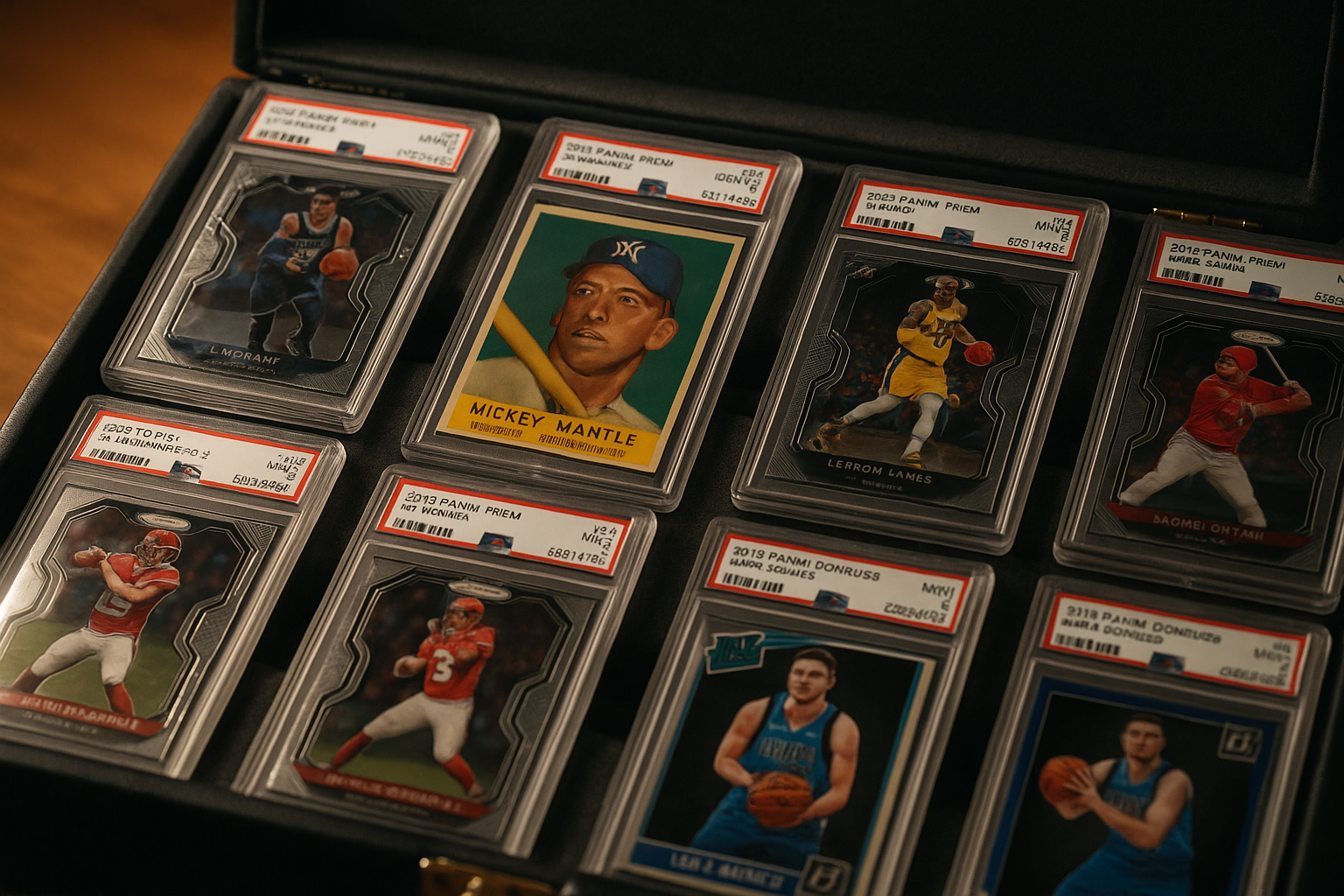
Sports card investing has become more nuanced than ever, with hobbyists and investors weighing the merits of vintage cards versus modern releases. Understanding these two major categories is essential for developing a smart collection strategy. In this article, we’ll explore the key differences, risks, rewards, and market factors shaping both vintage and modern sports card investing.
Defining Vintage and Modern: What Sets Them Apart
In understanding the differences between vintage and modern sports card investing, it is essential to reflect on how the cards themselves are defined and what separates them beyond just age. Generally, a sports card qualifies as vintage if it was produced prior to the 1980s, with key eras such as the pre-war (prior to 1945), post-war (late 1940s to 1960s), and the transitional period of the 1970s. Modern cards, by contrast, are considered those issued from the 1980s onward, spanning the junk wax era, the explosion of the hobby in the 1990s, and the many innovations and premium products that have emerged since the turn of the millennium. The fundamental distinctions lie not only in timeframes but also in manufacturing techniques and distribution methods. Vintage cards were often printed on thicker cardboard stock, with limited color fidelity and rudimentary photographic images. For example, the 1952 Topps Mickey Mantle—one of the most celebrated vintage cards—was the product of a simple but iconic design, limited print runs, and hand-cut sheets. Vintage cards attained scarcity not only due to lower production numbers but also because of poor preservation, with many cards lost or destroyed over decades. Modern cards, on the other hand, leverage advanced printing technologies, high-gloss finishes, serial numbering, autographs, and even embedded pieces of memorabilia. The proliferation of limited edition print runs, such as rookie autographs or refractors, creates artificial scarcity, but sheer volume and variety differentiate the era. Distribution has also evolved—from the era of grocery store wax packs to hobby shops and direct-to-consumer online releases. Nostalgia plays a powerful role for vintage, where cards evoke childhood memories and an era of baseball legends. Collectors often prize the physical and historical connection, as seen with cards like the 1951 Bowman Willie Mays. Modern cards, while sometimes lacking historical romance, captivate with chase elements and immediate ties to current stars—think of Luka Dončić rookie autographs drawing massive attention and value soon after his debut. The intrinsic and emotional differences between vintage and modern continue to define both markets, influencing everything from collectibility to long-term investment strategies.
Investment Potential and Value Trends Over Time
The investment potential of vintage versus modern sports cards has diverged significantly due to shifts in scarcity, demand drivers, and collector psychology over the decades. Vintage cards, particularly those featuring legendary figures like Babe Ruth or Mickey Mantle, have demonstrated a pattern of long-term appreciation, motivated by their genuine scarcity and historic significance. Graded population reports from services such as PSA and SGC reinforce this rarity; for instance, high-grade examples of the 1952 Topps Mickey Mantle have consistently reached record prices—culminating in an SGC 9.5 selling for $12.6 million in 2022. This data-driven transparency, tied to survivorship and low print runs, instills collector confidence in the stability of vintage assets. Modern cards, on the other hand, are heavily influenced by speculation, short-term player performance, and cultural moments that can cause dramatic value swings. The rookie card of a young star—consider Luka Dončić’s 2018 National Treasures RPA—might eclipse $4 million if the player performs exceptionally, but values can drop precipitously due to injury or a cold streak. The manufactured scarcity created by low serial-numbered parallels and autographs adds a gambling element, enticing high-risk, high-reward investment strategies. However, the large number of graded modern cards, as illustrated in population reports, means “rarity” can often be relative, leading to volatility absent the organic scarcity of vintage. Cultural moments, Hall of Fame inductions, and milestone achievements can buoy the value of both vintage and modern cards but tend to have a more dramatic, immediate impact on modern issues. In contrast, the enduring legacies of iconic athletes anchor vintage prices, making them less susceptible to faddish booms and busts. Landmark sales and auction results consistently highlight these contrasting dynamics: vintage cards offer reliable appreciation, while modern cards present amplified risk and reward tied to the ever-shifting currents of the game.
Risk Management and Market Volatility
The risks associated with sports card investing shift significantly when comparing vintage to modern cards, both in nature and degree. Counterfeiting has long targeted high-value vintage cards, but modern cards, with their parallel versions and cutting-edge printing technologies, are also vulnerable. Authentication and grading by reputable services are critical risk mitigation tools for both eras, but vintage collectors should pay special attention due to the prevalence of skillful forgeries and altered cards—often detected only through expert scrutiny. Market volatility in modern cards can be fierce, driven by player performance, sudden injuries, or simply the ebbs and flows of collector hype. Emerging stars can see their card prices multiply overnight, only to plummet with a slump or off-field controversy. The volatility is amplified by “chase” cards and limited print runs, which can inflate values during speculative bubbles. In comparison, vintage cards are less affected by such hype cycles, as their value is anchored by historical significance and established collecting bases. The careers and legacies of vintage-era athletes are already written, offering some insulation from rapid market corrections. Risk in modern cards also stems from changing popularity—rookie hype, team trades, and market sentiment can render yesterday’s “hot card” obsolete quickly. Conversely, while vintage cards can suffer from broader economic downturns or changing tastes, their relative scarcity and consistent demand cushion against steep drops. Risk management strategies should include third-party grading, ongoing education on forgeries, and diversified investing. Vintage investors may further protect themselves by focusing on cards with robust provenance. Modern investors, meanwhile, benefit from diversification—not overexposing themselves to a single player or print run, and regularly monitoring market sentiment to anticipate cycles.
Building a Balanced Portfolio: Blending Vintage and Modern
A well-balanced sports card investment portfolio thoughtfully mixes vintage icons with modern up-and-comers, allowing collectors to capture long-term stability while also pursuing growth opportunities. The allocation between vintage and modern should directly reflect the investor’s primary goals, investment time horizon, and tolerance for risk and market swings. For those more interested in long-term capital preservation and slow-but-steady appreciation, a heavier allocation (often 60–80%) toward vintage blue-chip cards—the likes of early Mickey Mantle, Michael Jordan rookie, or 1930s Babe Ruth—offers proven historical value, relative price resilience, and greater insulation from short-term hype. On the other hand, investors aiming for more aggressive short- or mid-term gains may tilt slightly more toward modern cards, seeking to capitalize on breakout stars or emerging prospects, but they must accept higher volatility. Identifying undervalued assets is critical in both spheres. In vintage, diligent market research helps spot overlooked hall-of-famers, cards with low population reports, or significant historical context undervalued by current prices. For modern, tracking rookie performance, analytical trends, and new product releases enables investors to spot future stars before the market fully catches up. Diversification not only within eras but across sports and card types—rookie cards, parallels, autographs, and inserts—spreads risk and multiplies exposure to upside scenarios. Regularly monitoring auction sales, grading pop reports, hobby forums, and new card releases helps adjust the portfolio to evolving trends and economic cycles, reducing the likelihood of being caught in a market downturn. When blended prudently, a portfolio of vintage stalwarts and modern prospects diversifies away from individual risks and bubbles, maximizing both steady appreciation and the potential for outsized returns.
Conclusions
Vintage and modern sports card investing each offer distinct opportunities and challenges. A savvy collector will appreciate the enduring security of vintage cards and the dynamic possibilities of modern ones. By understanding their unique characteristics and integrating both into your strategy, you can build a robust, rewarding portfolio that stands the test of time and market changes.
Defining Vintage and Modern: What Sets Them Apart
In understanding the differences between vintage and modern sports card investing, it is essential to reflect on how the cards themselves are defined and what separates them beyond just age. Generally, a sports card qualifies as vintage if it was produced prior to the 1980s, with key eras such as the pre-war (prior to 1945), post-war (late 1940s to 1960s), and the transitional period of the 1970s. Modern cards, by contrast, are considered those issued from the 1980s onward, spanning the junk wax era, the explosion of the hobby in the 1990s, and the many innovations and premium products that have emerged since the turn of the millennium. The fundamental distinctions lie not only in timeframes but also in manufacturing techniques and distribution methods. Vintage cards were often printed on thicker cardboard stock, with limited color fidelity and rudimentary photographic images. For example, the 1952 Topps Mickey Mantle—one of the most celebrated vintage cards—was the product of a simple but iconic design, limited print runs, and hand-cut sheets. Vintage cards attained scarcity not only due to lower production numbers but also because of poor preservation, with many cards lost or destroyed over decades. Modern cards, on the other hand, leverage advanced printing technologies, high-gloss finishes, serial numbering, autographs, and even embedded pieces of memorabilia. The proliferation of limited edition print runs, such as rookie autographs or refractors, creates artificial scarcity, but sheer volume and variety differentiate the era. Distribution has also evolved—from the era of grocery store wax packs to hobby shops and direct-to-consumer online releases. Nostalgia plays a powerful role for vintage, where cards evoke childhood memories and an era of baseball legends. Collectors often prize the physical and historical connection, as seen with cards like the 1951 Bowman Willie Mays. Modern cards, while sometimes lacking historical romance, captivate with chase elements and immediate ties to current stars—think of Luka Dončić rookie autographs drawing massive attention and value soon after his debut. The intrinsic and emotional differences between vintage and modern continue to define both markets, influencing everything from collectibility to long-term investment strategies.
Investment Potential and Value Trends Over Time
The investment potential of vintage versus modern sports cards has diverged significantly due to shifts in scarcity, demand drivers, and collector psychology over the decades. Vintage cards, particularly those featuring legendary figures like Babe Ruth or Mickey Mantle, have demonstrated a pattern of long-term appreciation, motivated by their genuine scarcity and historic significance. Graded population reports from services such as PSA and SGC reinforce this rarity; for instance, high-grade examples of the 1952 Topps Mickey Mantle have consistently reached record prices—culminating in an SGC 9.5 selling for $12.6 million in 2022. This data-driven transparency, tied to survivorship and low print runs, instills collector confidence in the stability of vintage assets. Modern cards, on the other hand, are heavily influenced by speculation, short-term player performance, and cultural moments that can cause dramatic value swings. The rookie card of a young star—consider Luka Dončić’s 2018 National Treasures RPA—might eclipse $4 million if the player performs exceptionally, but values can drop precipitously due to injury or a cold streak. The manufactured scarcity created by low serial-numbered parallels and autographs adds a gambling element, enticing high-risk, high-reward investment strategies. However, the large number of graded modern cards, as illustrated in population reports, means “rarity” can often be relative, leading to volatility absent the organic scarcity of vintage. Cultural moments, Hall of Fame inductions, and milestone achievements can buoy the value of both vintage and modern cards but tend to have a more dramatic, immediate impact on modern issues. In contrast, the enduring legacies of iconic athletes anchor vintage prices, making them less susceptible to faddish booms and busts. Landmark sales and auction results consistently highlight these contrasting dynamics: vintage cards offer reliable appreciation, while modern cards present amplified risk and reward tied to the ever-shifting currents of the game.
Risk Management and Market Volatility
The risks associated with sports card investing shift significantly when comparing vintage to modern cards, both in nature and degree. Counterfeiting has long targeted high-value vintage cards, but modern cards, with their parallel versions and cutting-edge printing technologies, are also vulnerable. Authentication and grading by reputable services are critical risk mitigation tools for both eras, but vintage collectors should pay special attention due to the prevalence of skillful forgeries and altered cards—often detected only through expert scrutiny. Market volatility in modern cards can be fierce, driven by player performance, sudden injuries, or simply the ebbs and flows of collector hype. Emerging stars can see their card prices multiply overnight, only to plummet with a slump or off-field controversy. The volatility is amplified by “chase” cards and limited print runs, which can inflate values during speculative bubbles. In comparison, vintage cards are less affected by such hype cycles, as their value is anchored by historical significance and established collecting bases. The careers and legacies of vintage-era athletes are already written, offering some insulation from rapid market corrections. Risk in modern cards also stems from changing popularity—rookie hype, team trades, and market sentiment can render yesterday’s “hot card” obsolete quickly. Conversely, while vintage cards can suffer from broader economic downturns or changing tastes, their relative scarcity and consistent demand cushion against steep drops. Risk management strategies should include third-party grading, ongoing education on forgeries, and diversified investing. Vintage investors may further protect themselves by focusing on cards with robust provenance. Modern investors, meanwhile, benefit from diversification—not overexposing themselves to a single player or print run, and regularly monitoring market sentiment to anticipate cycles.
Building a Balanced Portfolio: Blending Vintage and Modern
A well-balanced sports card investment portfolio thoughtfully mixes vintage icons with modern up-and-comers, allowing collectors to capture long-term stability while also pursuing growth opportunities. The allocation between vintage and modern should directly reflect the investor’s primary goals, investment time horizon, and tolerance for risk and market swings. For those more interested in long-term capital preservation and slow-but-steady appreciation, a heavier allocation (often 60–80%) toward vintage blue-chip cards—the likes of early Mickey Mantle, Michael Jordan rookie, or 1930s Babe Ruth—offers proven historical value, relative price resilience, and greater insulation from short-term hype. On the other hand, investors aiming for more aggressive short- or mid-term gains may tilt slightly more toward modern cards, seeking to capitalize on breakout stars or emerging prospects, but they must accept higher volatility. Identifying undervalued assets is critical in both spheres. In vintage, diligent market research helps spot overlooked hall-of-famers, cards with low population reports, or significant historical context undervalued by current prices. For modern, tracking rookie performance, analytical trends, and new product releases enables investors to spot future stars before the market fully catches up. Diversification not only within eras but across sports and card types—rookie cards, parallels, autographs, and inserts—spreads risk and multiplies exposure to upside scenarios. Regularly monitoring auction sales, grading pop reports, hobby forums, and new card releases helps adjust the portfolio to evolving trends and economic cycles, reducing the likelihood of being caught in a market downturn. When blended prudently, a portfolio of vintage stalwarts and modern prospects diversifies away from individual risks and bubbles, maximizing both steady appreciation and the potential for outsized returns.
Conclusions
Vintage and modern sports card investing each offer distinct opportunities and challenges. A savvy collector will appreciate the enduring security of vintage cards and the dynamic possibilities of modern ones. By understanding their unique characteristics and integrating both into your strategy, you can build a robust, rewarding portfolio that stands the test of time and market changes.
More like this
View all →
More in Uncategorized

Best Ways to Protect and Store Sports Cards in 2026
Sports card collecting is all about the thrill of discovery, preserving nostalgia, and building value for the future. Whether you’re new to the hobby…
August 11, 2026
8 min read

Discovering Deals and Hidden Gems at Silver Fox Collectibles
Hunting for amazing finds and authentic deals is at the heart of the collectibles hobby. At Silver Fox Collectibles in Lisbon, Maine, we make…
June 16, 2026
7 min read

Common Mistakes New Collectors Make in the Sports Card Hobby
Starting a sports card collection is exciting, but even the most enthusiastic beginners can stumble. At Silver Fox Collectibles, we’ve seen what trips up…
June 8, 2026
8 min read