
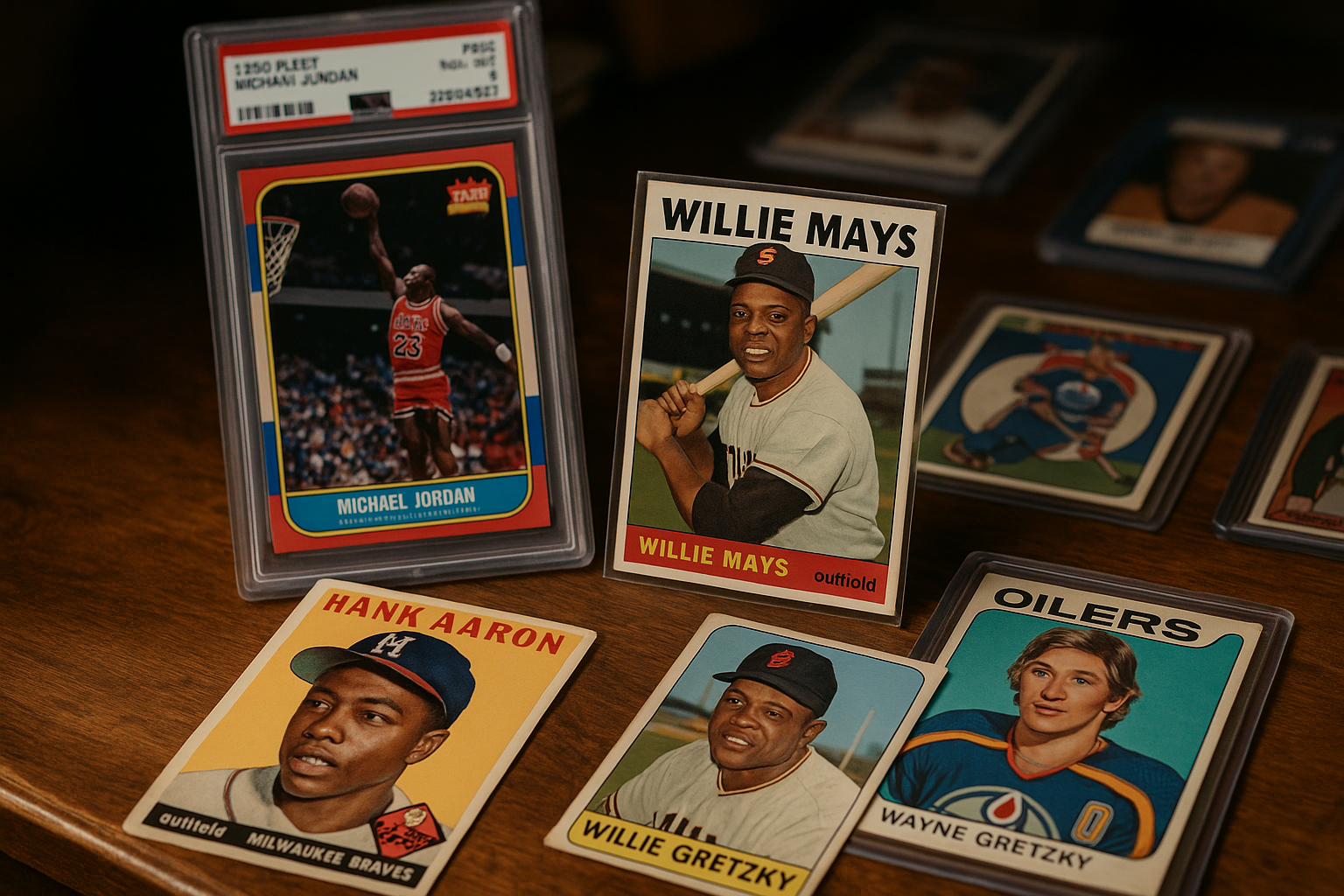
Sports card collecting has soared in popularity, with certain cards commanding impressive prices. Yet, not all cards are created equal. What truly determines a sports card’s value? This article delves into the crucial features and market trends that make sports cards desirable, helping collectors and enthusiasts alike understand what sets the most valuable cards apart.
Key Physical and Historical Factors That Influence Card Value
When determining a sports card’s value, collectors and investors pay close attention to both its physical characteristics and the unique place it holds in history. Condition stands at the forefront of these considerations. Even a card featuring a legendary player may see its value diminish severely if it shows signs of wear or mishandling. Condition is assessed via several critical factors: centering—whether the card’s image is properly aligned within its borders; edges—the sharpness and cleanliness of the card’s sides; corners—intact, crisp corners indicate careful handling, while rounded or frayed ones signal damage; and surface quality—free of scratches, stains, creases, print lines, or fading. Cards graded as “gem mint” or “mint” are much rarer and command considerable premiums over those in lesser shape. Age is another powerful determinant. Generally, older or “vintage” sports cards tend to be more valuable, since far fewer have survived in top condition after decades of circulation and storage. Cards from the early to mid-20th century, for example, are highly sought after because many were lost, damaged, or discarded before the modern collecting era began. This scarcity creates a significant increase in value for well-preserved examples. Rarity encompasses several concepts. Some cards were produced in highly limited numbers, such as special promotional issues, regional releases, or cards inserted as rare “chase” items in packs. Moreover, the overall number of cards remaining in good condition (the survival rate) is crucial. Scarcity due to a low print run, paired with high demand, naturally drives up prices. Print errors can also unexpectedly increase a card’s desirability; these are cards that left the factory with misprints—such as incorrect player stats, upside-down backs, or color misalignments. While many errors are considered flaws, some become prized oddities among collectors due to their rarity and unique character. Print runs refer to the total number of cards produced for a given set or individual card. The trend in modern collecting leans heavily toward limited edition cards, which are often serial-numbered. Knowing exactly how many examples exist (e.g., “1/50” or “23/100”) creates urgency and competition for acquisition. Rookie cards—the first official card depicting a player—hold a special allure. Collectors cherish rookie cards because they represent the beginning of an athlete’s professional story and, if the player becomes legendary, the card’s status grows into a cultural artifact. Similarly, vintage cards are seen as time capsules, connecting collectors to the early days of their sport and fueling nostalgia-driven demand. In summary, the confluence of impeccable condition, scarcity—whether from low print runs, age, or errors—and historical significance (especially rookie and vintage status), forms a tangible framework for assessing a sports card’s market value. The interplay of these elements continues to shape the evolving landscape of collecting, setting the stage for the intangible factors such as player prominence and cultural resonance that further propel certain cards into the spotlight.
The Role of Popular Players and Cultural Impact
While the physical and historical characteristics of a card set the stage for potential value, the heartbeat of desirability often pulses in direct rhythm with the athlete featured on the card. The identity, popularity, achievements, and even the personal narrative of the player depicted are key factors that can dramatically shift demand. A card’s financial and cultural appeal can soar or plummet based on the real-life highs and lows of the sports figure it celebrates. The phenomenon can often be traced to the magnetism of superstars and the legacies they leave behind. Cards spotlighting iconic figures like Michael Jordan, Tom Brady, Jackie Robinson, or Lionel Messi don’t just represent a collectible—they encapsulate moments that have shaped their respective sports. Players with storied careers, compelling personalities, or those who have become synonymous with excellence generate an emotional connection with fans and collectors alike. This demand translates directly to increased card values, especially when the athlete achieves significant milestones. For example, LeBron James surpassing Kareem Abdul-Jabbar’s all-time NBA scoring record created an immediate spike in the valuation of his rookie cards, as collectors sought tangible mementos of this historic achievement. Beyond achievements, the legacy aspect plays a critical role. Hall of Fame inductions serve as a formal recognition of greatness and often reignite interest in a player’s memorabilia. The announcement of a Hall of Fame class can trigger a flurry of activity and elevate card prices for both the inductee and peers from the same era. Similarly, championships, MVP awards, or the setting of new world records serve as pivotal moments that magnify the significance of related sports cards. Unforeseen or dramatic events can also have a seismic effect. The triumph of an underdog, a dazzling record-breaking performance, or a comeback after adversity can create immediate surges in demand. Perhaps most notably, tragic events—such as untimely deaths—can immortalize players, as seen in the aftermath of Kobe Bryant’s passing when his cards became objects of tribute and remembrance. Conversely, scandals and controversies, like doping revelations or off-field issues, can sometimes suppress values, although the added layer of notoriety can occasionally drive up prices among speculative collectors interested in the narrative’s complexity. Sports cards are also deeply affected by broader cultural moments. A player who becomes a pop culture symbol, appears in movies or music, or becomes central to sociopolitical conversations can see their card values swell as their impact transcends sport. The historical context—such as the breaking of color barriers, international breakthroughs, or championship droughts ended—can turn some cards into artifacts of both athletic and cultural significance. Collectors are, in essence, investing not just in cardboard, but in stories, personalities, and legacy. The fluctuating public perception around a player and their place in sporting history remains a dynamic force, capable of reshaping the landscape of sports card values overnight or etching them into eternity.
Market Trends, Grading, and Authentication in Determining Worth
As the sports card market has evolved from its early days, external forces like market trends, professional grading, and authentication services have taken center stage in determining value, often acting as crucial tipping points for both seasoned and new collectors. The interplay between changing collector behavior and innovations in how cards are verified or sold can radically alter the worth of a card—even for cards of less prominent players. One of the most powerful factors currently driving prices is the role of third-party grading companies, such as PSA (Professional Sports Authenticator), BGS (Beckett Grading Services), and SGC (Sportscard Guaranty Corporation). These companies assess the physical condition of cards against strict standards, issuing grades typically on a scale from 1 to 10. Even a single point of difference can mean a dramatic increase—or decrease—in a card’s value. For example, a 1986 Fleer Michael Jordan rookie card graded PSA 7 might sell for a few thousand dollars, while a PSA 10 version can command a premium of several multiples. This premium is not just about aesthetics; it reflects market trust in professional assessment, which reduces uncertainty regarding condition for both buyers and sellers. Authentication, distinct from grading, plays an equally vital role, especially for cards with autographs or rare vintage issues prone to counterfeiting. Services like PSA/DNA, JSA, and Beckett Authentication validate the authenticity of signatures or rare cards. An authenticated autographed card, for instance, can be worth many times more than a similar but unverified item. Collectors and investors demand certainty, and reliable authentication acts as a safeguard against the increasingly sophisticated forgeries circulating in the hobby. Broader market trends can suddenly shift card values. The explosion of interest in sports cards during the COVID-19 pandemic, aided by high-profile auction results and mainstream media coverage, led to record-breaking prices in 2020 and 2021. Auction houses, both traditional and digital (such as eBay or Goldin Auctions), make the market transparent, allowing real-time responses to news or market events. For example, the sale of a rare, graded Honus Wagner T206 at auction can set new benchmarks for vintage card prices across the board. Collector preferences also dictate short-term fluctuations. Waves of interest in new rookie classes, anniversary re-releases, or specific subsets (like refractors or serial-numbered parallels) can stoke demand. Digital trends, including the emergence of blockchain-verified digital trading cards (NFTs), have begun to influence how traditional collectibles are viewed, though the impact remains distinct compared to physical items. Ultimately, grading and authentication services offer objectivity and security, factors that have become indispensable as the hobby matures and attracts more investors. Combined with the constant ebb and flow of market sentiment—fueled by auctions, trends, and technological advancements—these elements continually redefine what’s valuable in the dynamic landscape of sports card collecting.
Conclusions
In summary, a sports card’s value is shaped by a blend of physical characteristics, the legacy of the featured player, and evolving market forces. Understanding these factors empowers collectors to make informed decisions, whether investing or growing their collections. Staying up-to-date with trends and ensuring proper card grading and authentication is essential to navigating the dynamic sports card landscape.
Key Physical and Historical Factors That Influence Card Value
When determining a sports card’s value, collectors and investors pay close attention to both its physical characteristics and the unique place it holds in history. Condition stands at the forefront of these considerations. Even a card featuring a legendary player may see its value diminish severely if it shows signs of wear or mishandling. Condition is assessed via several critical factors: centering—whether the card’s image is properly aligned within its borders; edges—the sharpness and cleanliness of the card’s sides; corners—intact, crisp corners indicate careful handling, while rounded or frayed ones signal damage; and surface quality—free of scratches, stains, creases, print lines, or fading. Cards graded as “gem mint” or “mint” are much rarer and command considerable premiums over those in lesser shape. Age is another powerful determinant. Generally, older or “vintage” sports cards tend to be more valuable, since far fewer have survived in top condition after decades of circulation and storage. Cards from the early to mid-20th century, for example, are highly sought after because many were lost, damaged, or discarded before the modern collecting era began. This scarcity creates a significant increase in value for well-preserved examples. Rarity encompasses several concepts. Some cards were produced in highly limited numbers, such as special promotional issues, regional releases, or cards inserted as rare “chase” items in packs. Moreover, the overall number of cards remaining in good condition (the survival rate) is crucial. Scarcity due to a low print run, paired with high demand, naturally drives up prices. Print errors can also unexpectedly increase a card’s desirability; these are cards that left the factory with misprints—such as incorrect player stats, upside-down backs, or color misalignments. While many errors are considered flaws, some become prized oddities among collectors due to their rarity and unique character. Print runs refer to the total number of cards produced for a given set or individual card. The trend in modern collecting leans heavily toward limited edition cards, which are often serial-numbered. Knowing exactly how many examples exist (e.g., “1/50” or “23/100”) creates urgency and competition for acquisition. Rookie cards—the first official card depicting a player—hold a special allure. Collectors cherish rookie cards because they represent the beginning of an athlete’s professional story and, if the player becomes legendary, the card’s status grows into a cultural artifact. Similarly, vintage cards are seen as time capsules, connecting collectors to the early days of their sport and fueling nostalgia-driven demand. In summary, the confluence of impeccable condition, scarcity—whether from low print runs, age, or errors—and historical significance (especially rookie and vintage status), forms a tangible framework for assessing a sports card’s market value. The interplay of these elements continues to shape the evolving landscape of collecting, setting the stage for the intangible factors such as player prominence and cultural resonance that further propel certain cards into the spotlight.
The Role of Popular Players and Cultural Impact
While the physical and historical characteristics of a card set the stage for potential value, the heartbeat of desirability often pulses in direct rhythm with the athlete featured on the card. The identity, popularity, achievements, and even the personal narrative of the player depicted are key factors that can dramatically shift demand. A card’s financial and cultural appeal can soar or plummet based on the real-life highs and lows of the sports figure it celebrates. The phenomenon can often be traced to the magnetism of superstars and the legacies they leave behind. Cards spotlighting iconic figures like Michael Jordan, Tom Brady, Jackie Robinson, or Lionel Messi don’t just represent a collectible—they encapsulate moments that have shaped their respective sports. Players with storied careers, compelling personalities, or those who have become synonymous with excellence generate an emotional connection with fans and collectors alike. This demand translates directly to increased card values, especially when the athlete achieves significant milestones. For example, LeBron James surpassing Kareem Abdul-Jabbar’s all-time NBA scoring record created an immediate spike in the valuation of his rookie cards, as collectors sought tangible mementos of this historic achievement. Beyond achievements, the legacy aspect plays a critical role. Hall of Fame inductions serve as a formal recognition of greatness and often reignite interest in a player’s memorabilia. The announcement of a Hall of Fame class can trigger a flurry of activity and elevate card prices for both the inductee and peers from the same era. Similarly, championships, MVP awards, or the setting of new world records serve as pivotal moments that magnify the significance of related sports cards. Unforeseen or dramatic events can also have a seismic effect. The triumph of an underdog, a dazzling record-breaking performance, or a comeback after adversity can create immediate surges in demand. Perhaps most notably, tragic events—such as untimely deaths—can immortalize players, as seen in the aftermath of Kobe Bryant’s passing when his cards became objects of tribute and remembrance. Conversely, scandals and controversies, like doping revelations or off-field issues, can sometimes suppress values, although the added layer of notoriety can occasionally drive up prices among speculative collectors interested in the narrative’s complexity. Sports cards are also deeply affected by broader cultural moments. A player who becomes a pop culture symbol, appears in movies or music, or becomes central to sociopolitical conversations can see their card values swell as their impact transcends sport. The historical context—such as the breaking of color barriers, international breakthroughs, or championship droughts ended—can turn some cards into artifacts of both athletic and cultural significance. Collectors are, in essence, investing not just in cardboard, but in stories, personalities, and legacy. The fluctuating public perception around a player and their place in sporting history remains a dynamic force, capable of reshaping the landscape of sports card values overnight or etching them into eternity.
Market Trends, Grading, and Authentication in Determining Worth
As the sports card market has evolved from its early days, external forces like market trends, professional grading, and authentication services have taken center stage in determining value, often acting as crucial tipping points for both seasoned and new collectors. The interplay between changing collector behavior and innovations in how cards are verified or sold can radically alter the worth of a card—even for cards of less prominent players. One of the most powerful factors currently driving prices is the role of third-party grading companies, such as PSA (Professional Sports Authenticator), BGS (Beckett Grading Services), and SGC (Sportscard Guaranty Corporation). These companies assess the physical condition of cards against strict standards, issuing grades typically on a scale from 1 to 10. Even a single point of difference can mean a dramatic increase—or decrease—in a card’s value. For example, a 1986 Fleer Michael Jordan rookie card graded PSA 7 might sell for a few thousand dollars, while a PSA 10 version can command a premium of several multiples. This premium is not just about aesthetics; it reflects market trust in professional assessment, which reduces uncertainty regarding condition for both buyers and sellers. Authentication, distinct from grading, plays an equally vital role, especially for cards with autographs or rare vintage issues prone to counterfeiting. Services like PSA/DNA, JSA, and Beckett Authentication validate the authenticity of signatures or rare cards. An authenticated autographed card, for instance, can be worth many times more than a similar but unverified item. Collectors and investors demand certainty, and reliable authentication acts as a safeguard against the increasingly sophisticated forgeries circulating in the hobby. Broader market trends can suddenly shift card values. The explosion of interest in sports cards during the COVID-19 pandemic, aided by high-profile auction results and mainstream media coverage, led to record-breaking prices in 2020 and 2021. Auction houses, both traditional and digital (such as eBay or Goldin Auctions), make the market transparent, allowing real-time responses to news or market events. For example, the sale of a rare, graded Honus Wagner T206 at auction can set new benchmarks for vintage card prices across the board. Collector preferences also dictate short-term fluctuations. Waves of interest in new rookie classes, anniversary re-releases, or specific subsets (like refractors or serial-numbered parallels) can stoke demand. Digital trends, including the emergence of blockchain-verified digital trading cards (NFTs), have begun to influence how traditional collectibles are viewed, though the impact remains distinct compared to physical items. Ultimately, grading and authentication services offer objectivity and security, factors that have become indispensable as the hobby matures and attracts more investors. Combined with the constant ebb and flow of market sentiment—fueled by auctions, trends, and technological advancements—these elements continually redefine what’s valuable in the dynamic landscape of sports card collecting.
Conclusions
In summary, a sports card’s value is shaped by a blend of physical characteristics, the legacy of the featured player, and evolving market forces. Understanding these factors empowers collectors to make informed decisions, whether investing or growing their collections. Staying up-to-date with trends and ensuring proper card grading and authentication is essential to navigating the dynamic sports card landscape.
More like this
View all →
More in Uncategorized

Best Ways to Protect and Store Sports Cards in 2026
Sports card collecting is all about the thrill of discovery, preserving nostalgia, and building value for the future. Whether you’re new to the hobby…
August 11, 2026
8 min read
Discovering Deals and Hidden Gems at Silver Fox Collectibles
Hunting for amazing finds and authentic deals is at the heart of the collectibles hobby. At Silver Fox Collectibles in Lisbon, Maine, we make…
June 16, 2026
7 min read

Common Mistakes New Collectors Make in the Sports Card Hobby
Starting a sports card collection is exciting, but even the most enthusiastic beginners can stumble. At Silver Fox Collectibles, we’ve seen what trips up…
June 8, 2026
8 min read